
SPI Master
telos SPI Master
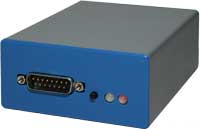
The hardware of the telos SPI Master contains an SPI master, GPIO pins, ADC pins, and a power supply.
The telos SPI Master is special since it offers you to control the SPI bus via USB or via a SOAP Webinterface using a standard LAN interface.
To reduce the communication overhead with the PC several high-level functions have been implemented in the hardware. E.g. the SPI master can send one message again and again until the data read from the SPI slave contains a specified bit pattern.
To interface to the PC, USB and Ethernet are integrated. The device is powered by USB.
There are several ways to work with the telos SPI Master. You can use our SPI Studio, write your applications with the help of the powerful .NET based API or access the integrated web-interface. Additionally you can use web-services (SOAP) which enables a diversity of applications, independent of operating systems.
- Product
- API
- SPI Studio
- Web Interface
- Labview
- Matlab
- Technical Details
- 3rd Party Support
- Deliverables
Host Interfaces
- USB 2.0 (compatible to 1.1), connected as CDC (Communication Device Class)
- Ethernet (10/100 MBit)
- RS-232 115.200 Baud (with special error protection layer)
SPI
- Clock Frequency: 140 kHz – 18 MHz
- SPI Modes: 0 – 3
- Bit Ordering: MSB or LSB
- Chip Select: all GPIOs can be used
- Electrical Range: 1.2 – 5.5 V
- Polling of SPI slave until a specified bit pattern is read back
GPIO
- 5 GPIO (Input, Output Push Pull or Output Open Drain) + 2 GPIO (Input, Output Open Drain only); DC-coupled
- Modes: Input, Output Push Pull, Output Open Drain
- Electrical Range: 1.2 – 5.5 V
- Level changes on the input pins are reported automatically to the host (no polling required)
ADC
- Number of ADC channels: 3
- Sampling Rate: 1 ms – 65.5 s
- Eletrical Range: 0 – 5.5 V
- Levels on the ADC pins are measured automatically (no polling required).
VCC Out
- Power Supply: 3.3 V (up to 100 mA)
Ethernet
The complete functionality of the telos SPI Master can be controlled by an API, which is compatible to all programming
and script languages supporting the Microsoft .NET technology.
Features
- Supported .NET Frameworks: 2.0, 3.0, 3.5, 4.0, 4.5
- Unlimited number of telos SPI Masters can be connected to one PC
- Automatic detection of telos SPI Masters (USB and Ethernet only); RS232 connections can be established as well
- SPI flash programmer for ICs from AMIC, Atmel, Macronix and Spansion
- Parser for Intel HEX and Motorola SREC files
The telos SPI Master is delivered with a modern graphical user interface called telos SPI Studio.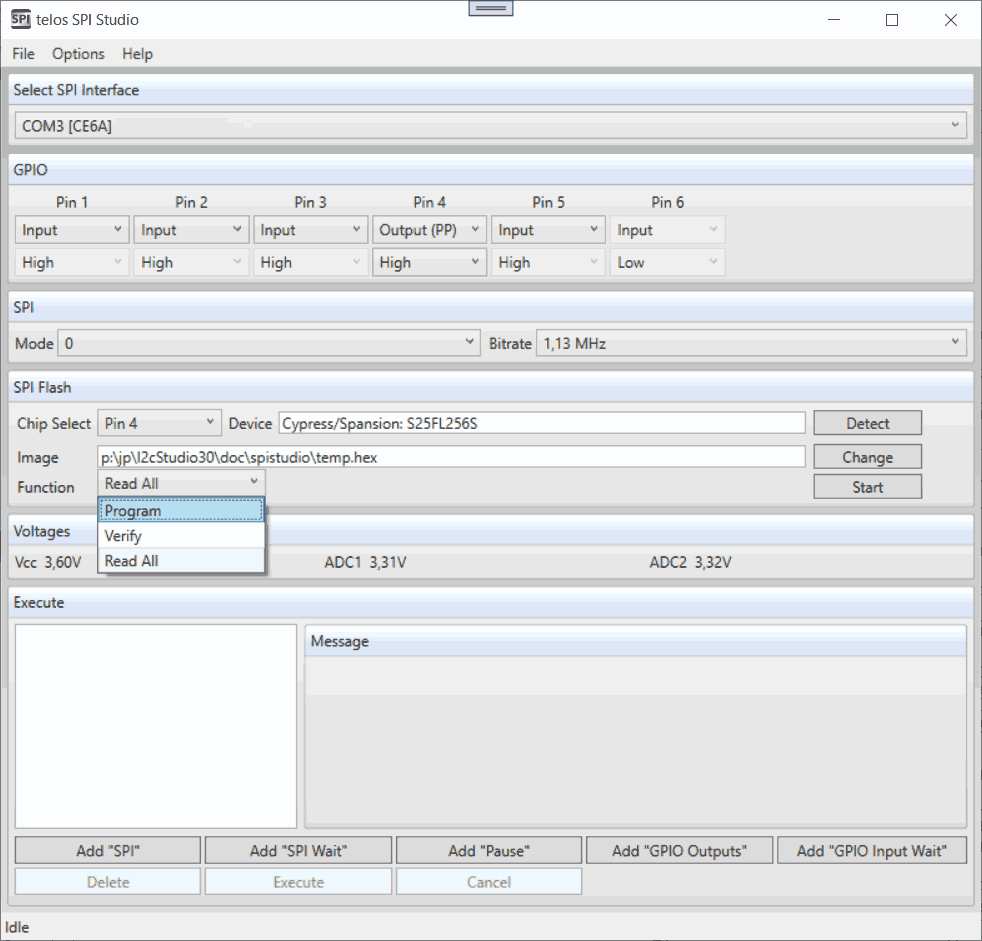
Features:
- Supported Operating Systems: Windows Vista, Windows 7 (32- or 64 bit), Windows 8, Windows 8.1, Windows 10
- Configuration of SPI and GPIOs
- Programming of Intel HEX or Motorola SREC files into SPI flashes
- Definition and sending of messages
The following messages types are supported:
SPI
- Sends a number of data bytes to a SPI slave and reads back a number of data bytes from a SPI slave.
- Bit order and chip select can be configured
SPI Wait
- Sends a number of data bytes to a SPI slave. This is repeated until the data bytes read back from the SPI slave
match the defined bit pattern or the timeout has expired. - Bit order and chip select can be configured
Pause
- Waits the specified time span before the next message gets executed
GPIO Outputs
- Modifies the level of one or several GPIO output pins
GPIO Input Wait
- Waits until the specified GPIO input pins have reached the specified levels or the timeout has expired
Interfacing
The SPI Studio is linked to the telos SPI Master via USB or Ethernet. Ethernet connected devices are detected automatically as long as they are in your local network.
Download
The software can be downloaded right here.
If the telos SPI Master is connected to the network, it can be controlled not only by the API and SPI Studio, but also by a standard web browser.
 The web interface offers the following functionality:
- Configuring and setting the GPIO pins
- Exchanging data with an SPI slave
- Getting the current voltage of the ADC pins
Webservices
The telos SPI Master implements a web service based on SOAP and WSDL. So, if the Ethernet interface of the SPI master is used, this web service can simply be consumed by SOAP-compatible development tools like e.g. Visual Studio, Eclipse (Java), or Labview. While the .NET API of the SPI master can be used on the Microsoft Windows platform, the web service interface can be used on other platforms like e.g. Linux.
Labview
The telos SPI Master supports Labview versions starting 9.0. The driver is included in the SPI Studio setup.
The telos SPI Master is the ideal companion device for Matlab when it comes to controlling SPI devices or to capture analog or digital data.
Matlab supports .NET making it fully compatible with the telos SPI master.
Incoming signals can be used to trigger .NET events and analog values can be used as input data.
There are no special tool boxes required for Matlab in order to use the telos SPI master.
LEDs
- LED 1: SPI traffic (green), VCCin to low (red)
- LED 2: Power (green)
DSUB 15
The following pin assignment is used on the DSUB-15 connector:
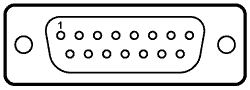
- 1 SPI_CLK
- 2 SPI_MOSI
- 3 GPIO 5 (SPI_CS_IN)
- 4 SPI_MISO
- 5 GPIO 6 / ADC (open drain only)
- 6 GPIO 7 / ADC (open drain only)
- 7 GND
- 8 –
- 9 –
- 10 VCC Out 3.3 V @ 100 mA
- 11 GPIO 4
- 12 GPIO 3
- 13 GPIO 2
- 14 GPIO 1
- 15 VCC In
Power Consumption: 150 mA driven via USB.
Additionally, the power supplied to pin 10 is taken from USB.
Weight: 161 g 10,5 x 8 x 4 cm Plastic housing
Presentation
The telos SPI master features advanced IO capabilities. This makes it an ideal tool for capturing digital and analog user input.
By explicitly supporting its proprietary API the telos SPI master can be seamlessly integrated with Presentation® a product of Neurobehavioral Systems Inc.
Five different digital sources such as buttons can be connected and processed at the same time. In addition, two analog sources such as potentiometers can be evaluated.
The device is powered directly from the PC’s USB port and therefore does not require additional connections.
A solid plastic housing as well as the use of a DSUB connector help protecting the setup in environments where a certain mechanical robustness is required.
Driver support is available for 64 and 32 bit versions of Windows Vista, Windows 7 and Windows 8.
The telos SPI Master is delivered by FedEx.
Everything is provided online; please install the software from our web site. This page serves as your manual. Please
come back to us in case you are missing something.
Additionally, you need a standard USB cable and a DSUB 15 connector.
Download
The software needs to be downloaded right here.
Order
398,00 €Weiterlesen